How can you ensure efficient production management, no matter what the scale and timeframe of a project? What’s the best way to manage resources and meet the client’s needs and expectations? And how can you do this when you’re busy? Oh, and there is a forecast for rain on the day you planned to film outside? Well, it’s all about communication, planning, time management and flexibility.
Production Management – What is it?
Production management refers to the process of planning, organising, and managing a project or production. As a production manager, you are responsible for a project from start to end. Your ultimate goal is to ensure that the production progresses efficiently, effectively and meets the clients needs. To achieve this, production managers need to do a range of tasks.
You first have to understand the client brief. Communicating with the client is essential throughout a project but getting the brief clear is key. Communication is also essential to ensure the team and any contributors know exactly what they need to do and when.
Planning and time management are important from day 1 too. You need to approve suitable locations and allocate staff. For this, you need to ensure that you are all over the time frame. When is the project due? Project managers work backwards from there, building in a contingency in case something needs to change. That’s where flexibility comes in!
Our Projects
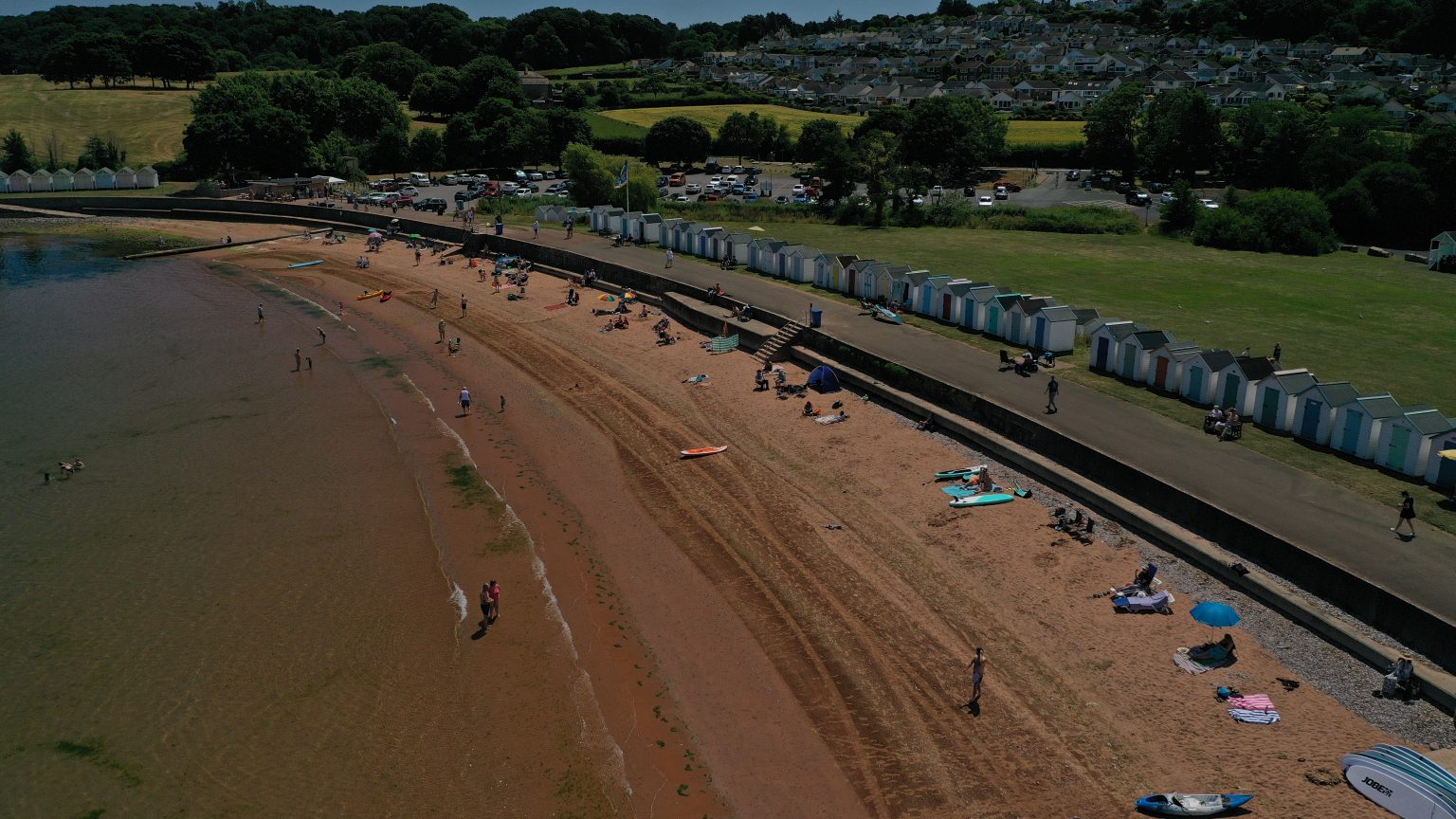
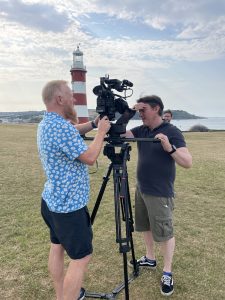
Of course, it’s no surprise that as a Southwest video production company we have clients in the tourism industry. In each video project, our clients want to see their location or attraction looking its best. And that generally means filming in spring and summer. So these periods are some of our busiest times. Now throw in the weather and that can mean tight filming schedules. That’s where strategic planning, communication and flexibility come in useful.
A recent example project that we successfully completed, involved filming at multiple attractions. Nineteen to be exact. And we had just two months to complete the filming. If that sounds like a lot of filming, it was just one of the many projects we were working on at the time. All of which are of equal importance to us.
Communication and Planning
Thankfully, we’re no strangers to handling multiple productions at once. The project manager coordinated the locations, communicating with each to make the best use of our time and the weather windows. Let’s just say we are VERY familiar with the Met Office weather app. On average, with planning, we managed to complete between three and four shoots for that particular project every week.
In addition to filming, there was post-production, which needed to happen while filming progressed to ensure we had the shots we needed. But thankfully, post-production doesn’t rely on good weather. Or daylight for that matter!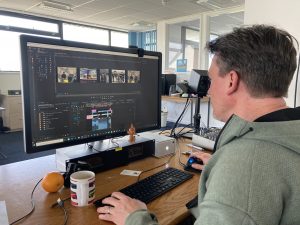
When we need to, we also have some excellent freelancers who support us, meaning we can literally be in two places at the same time. So with an experienced well-coordinated team and efficient production management, it was completely achievable. And despite the pressure, it was exciting to work on this scale of the project and to create something extraordinary (even if we do say so ourselves!)
Time management
Time management is a crucial element for any successful project. This means you need to optimise your workflow, which leads to better outcomes. For video production, it’s essential to have a storyboard or script outlining every shot to ensure that your client’s expectations are met. It’s important to get your client’s input when creating that storyboard since they often have a specific vision in mind.
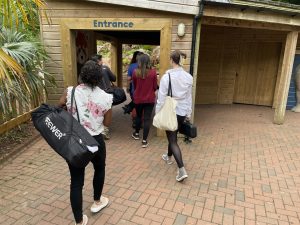
With proper planning, you can deliver great results. After all – nobody wants to run out of time before you have captured everything! At Paignton Zoo, where the number of animals and scale of location posed quite the challenge, we benefitted from a well-crafted call sheet and shot list. A targeted shot list resulted in an awe-inspiring video that our client was happy with.
And More Planning!
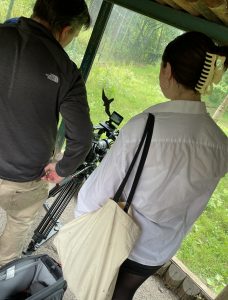
We’re committed to making sure that each of our films turns out brilliantly, and part of that involves taking care of ourselves and our team. During an eight-hour shoot, building breaks is essential for maintaining good workflow. Camera equipment can be heavy, and you need your team at their best. It’s also important to schedule a time to set up those cameras and to have your shot list to hand. Once those shots are in ‘the can’ (a saying from the days when the film was physical rather than digital), then there’s hopefully an opportunity to look around before the next location to see whether there is anything extra you should shoot.
Taking time on your project is particularly important where there are additional safety measures to consider, for example, our shoot with Torquay Watersports. One of our favourite experiences during this large-scale project, we were on a moving power boat while filming with our drone. Obviously, safety is number 1, so it was important to take our time to make sure all eventualities were considered.
Of course, every shoot is risk assessed, but some are more involved than others. Taking that extra time to plan for a safe shoot is essential. Once this is in place, you can film what you need in confidence. We captured stunning footage and that care and hard work paid off.

Location
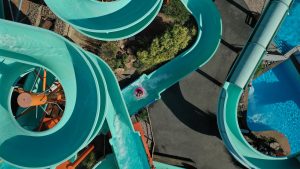
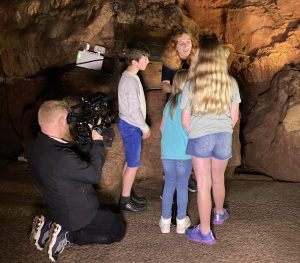
We’ve had the pleasure of shooting in other amazing locations where specific considerations are involved. From taking our equipment into caves at Kents Cavern, capturing people whizzing down slides at Splashdown or filming out of train doors with Dartmouth steam railway, each location needs careful planning.
For example, you might need to consider the distances between each shot. If you’re filming at a zoo, for example, you can expect to spend anywhere from five to fifteen minutes just walking between different animals. (that’s not to mention waiting for them to cooperate! You can find more about filming with animals here.). Building in that extra ‘travel’ time makes sure you capture what you planned.
You might also want to think about terrain. We filmed at Babbacombe model village which is nestled on a steep hill. Speaking with our client meant we knew what equipment we would need. In this instance, this meant handheld devices with a steady cam and a Wiral. This meant we could ‘fly’ our Go Pro through the attraction. But it’s always good to pack equipment for most eventualities, so you can adapt if you need to.
Flexibility
And that ability to adapt is all part of being flexible. You can plan all you like but there is always the possibility of something changing. Weather predictions, for example. So we always build contingency into a larger project and are ready to move our schedule around to make the best use of the conditions. As a project manager, you then need to inform all involved and that brings us back to communication!
What do the production management experts say?
“I have a lot of passion for keeping busy and organising tasks. One of my methods involves creating a checklist for each production. This list typically includes important items such as risk assessments, call sheets, shot lists, and storyboards. Although it can sometimes be challenging to coordinate everyone’s schedules, it’s best to just pick up the phone rather than send an email, particularly for those who may not always be stationed at a desk.
Another helpful strategy involves pinpointing the location on a map and including it on the call sheet, along with suggested parking areas and weather forecasts. These small details can greatly help crew members on site!
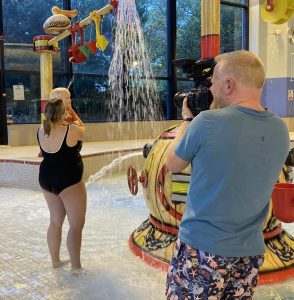
“Every shoot is different. My favourite shoot last year had to be Waves leisure pool, where filming in and around water had its own considerations. For example, we had to make sure that the cameras warmed up to poolside temperatures, to avoid them steaming up. I also arranged for a ‘cast’ to be filmed at the pool. I really enjoyed the challenge and it was a fun shoot and great to see it all edited when complete.”
– Jamie Venter, production and media manager.
Check out our Youtube to see what we got up to last summer now!